
Who cleans up after a renovation?
Check your contract before the job wraps up. Some contractors haul their own debris and do a broom sweep; others leave the old cabinets, torn-out flooring and drywall scraps for you. Either way, a broom sweep is not the same as a clean.
Post-renovation cleanup is really three jobs: getting the debris out, doing the hands-on site work, and cleaning the finished space. Our three sister companies split them that way. Local Junk Removers hauls the debris, Local Staffing & Labour supplies labourers for builders, and Local Cleaning Crew does the clean.
Renovation debris removal: what goes before the clean
Local Junk Removers takes away the heavy, bulky leftovers from a renovation:
- Drywall offcuts, broken plaster and old trim
- Torn-out flooring, carpet and underlay
- Old cabinets, countertops, vanities and fixtures
- Packaging, boxes and lumber offcuts from the install
- Light demolition of kitchens, bathrooms, sheds, decks and fences
For bigger projects they also offer bin rentals, so debris has somewhere to go while work is underway. Usable cabinets and fixtures go to donation where possible, and materials are recycled where possible. Leftover paint, solvents and other hazardous products need separate handling, so mention them when you book.
Why the final clean should wait until the trades are finished
Sanding drywall, cutting tile and fitting trim all create fine dust that settles for days and travels through the heating vents into rooms nobody worked in. If you clean while the painters or floor installers still have work to do, you'll likely be cleaning again after they leave.
The best time to book is after the last trade packs up. Before the crew arrives, it helps to swap the furnace filter, ask the contractor to take down any plastic sheeting, and have the debris already gone so the cleaners can get to the floors and baseboards.
How to clean drywall dust after a renovation
If you're tackling it yourself, the order matters more than the products. Work top to bottom, and dry before wet:
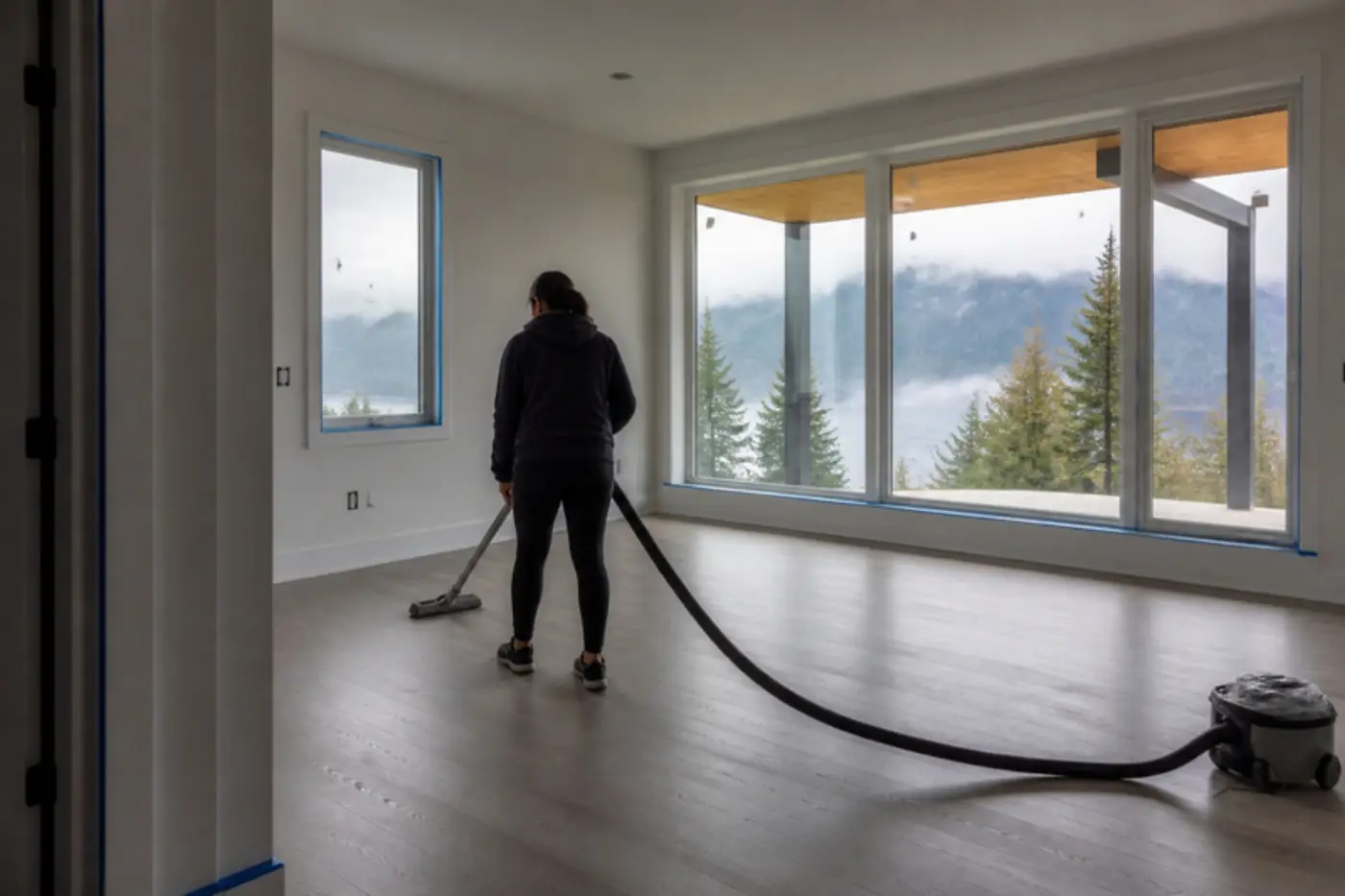
- Use a shop vacuum or a vacuum with a fine-dust filter. A household vacuum's filter can clog fast, and a broom just lifts the dust back into the air.
- Vacuum ceiling corners, walls, vents, window tracks and light fixtures before you touch the floors.
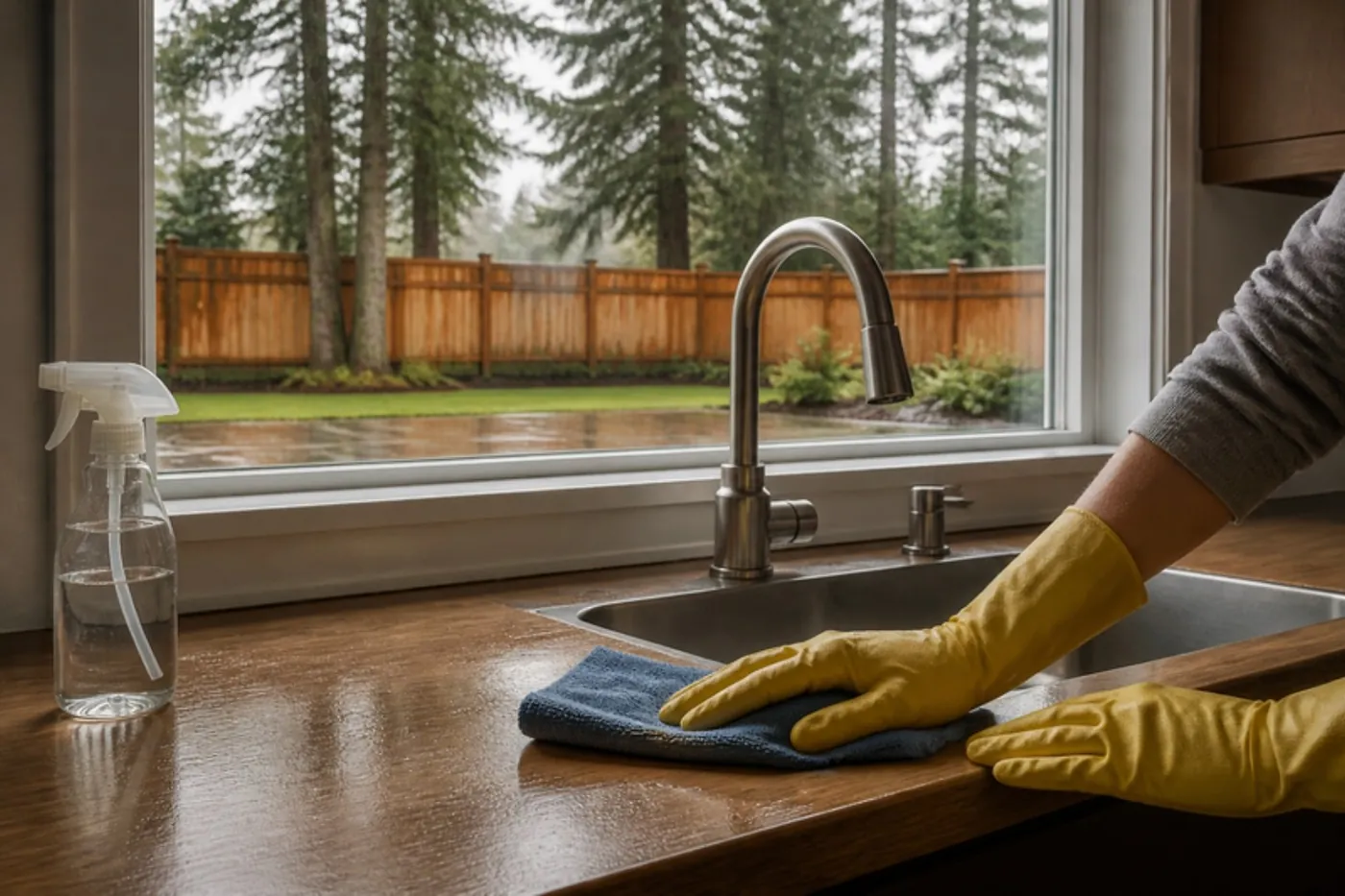
- Wipe walls, trim, doors and baseboards with a barely damp microfibre cloth. Too much water turns drywall dust into a streaky film.
- Rinse cloths often and change the water as soon as it looks cloudy.
- Empty and wipe inside cabinets and drawers, where dust settles even with the doors closed.
- Do the floors last: vacuum first, then damp-mop.
- Plan a quick second pass a few days later for dust that settles out of the air and vents.
For a whole house, or when you'd rather hand it off, our builder and renovation dust cleaning can cover walls, trim, vents, cabinets, windows and floors, and the crew brings the equipment.
Construction cleanup before you move in
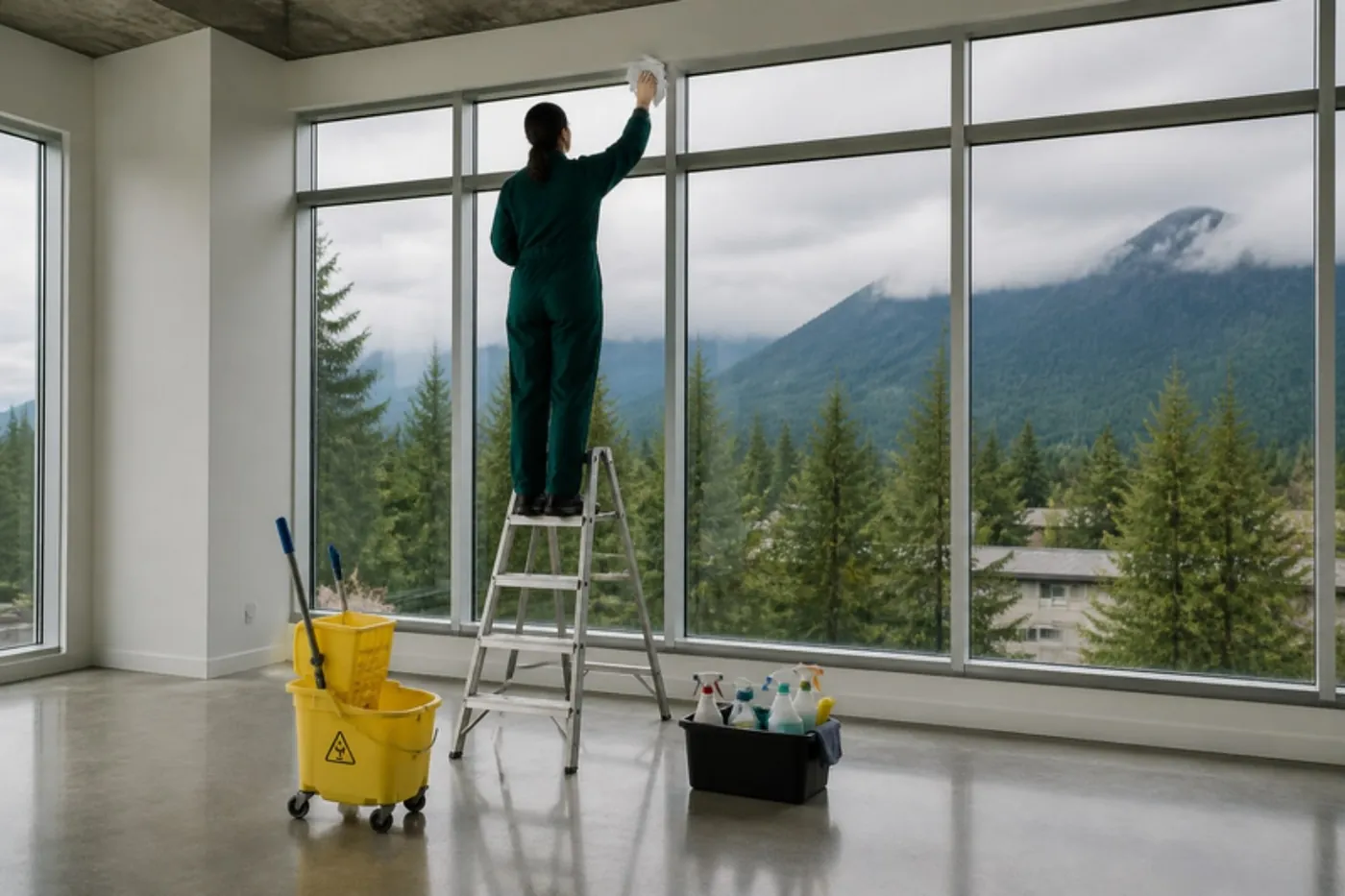
When a renovation or new build is the last step before moving in, the clean goes past dust. Expect sticker and label residue on new windows and fixtures, and grit in window tracks and cabinet drawers. Our sticker and residue removal and window, frame and sill cleaning take care of the details that make a space feel finished.
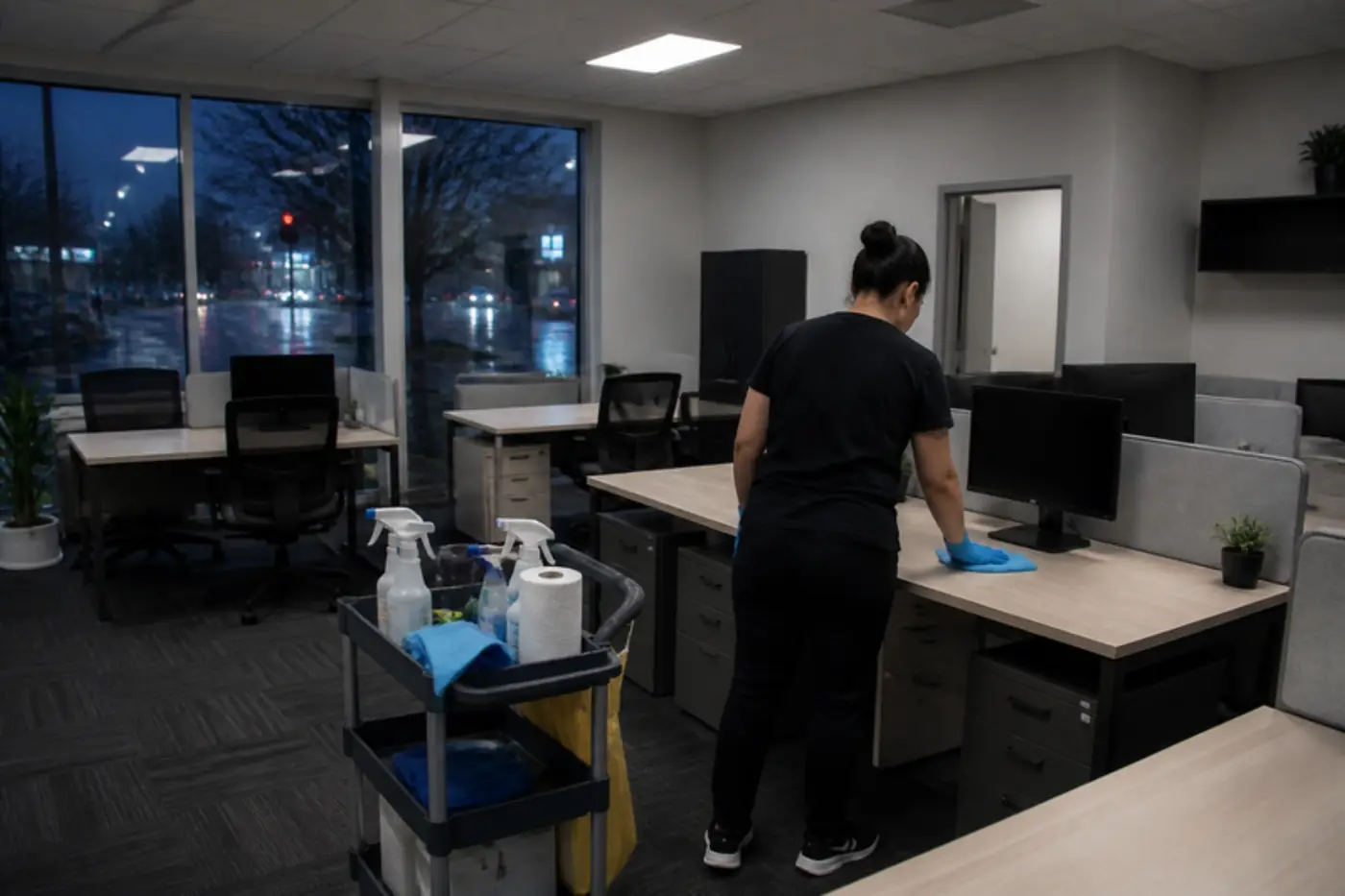
For builders and contractors, the work often happens in stages. We offer active job site cleaning during the project and a final clean at the end. When a site needs more hands for demolition or cleanup, Local Staffing & Labour supplies demolition and site cleanup labourers who can work alongside your crew.
What to expect when you book a post-renovation clean
Text photos of the space to 778-786-0793 or use our quote form, and let us know when the trades expect to finish. We confirm the scope and price with you before any work begins, and the crew brings standard supplies and equipment. Our crew is WorkSafeBC covered and fully insured, we're locally owned, and we recycle where possible.
Some work is outside our scope. In older homes, materials such as drywall joint compound, plaster, flooring and insulation may need to be tested for asbestos, and testing and removal need a certified specialist. Mould remediation, biohazards and other hazardous materials need a specialist too. Once that work is done, we can take care of the regular clean.
Questions people ask
01How long after a renovation should you wait to clean?
Book the final clean after the last trade has finished, including painters and floor installers. Fine dust keeps settling for days, so a light follow-up wipe of flat surfaces can be worth it.
02Who is responsible for removing renovation debris?
Check your contract, since some contractors haul their own debris and some leave it for the homeowner. If it's left with you, Local Junk Removers can haul drywall, flooring, cabinets and fixtures, or set you up with a bin rental.
03Can I use a regular vacuum on drywall dust?
Fine drywall dust can clog a household vacuum's filter quickly. A shop vacuum or a vacuum with a fine-dust filter works better, and our crew brings its own equipment.
04Do you clean during construction or only after?
Both. Builders and contractors can book active job site cleaning while work is underway, plus a new construction clean before move-in.
05Do you deal with asbestos or mould after a renovation?
No. Asbestos testing and removal need a certified specialist, and mould remediation needs a specialist as well. Once that work is complete, we can do the regular clean.
 Working together
 Working together
 Working together